
Nicholas County Sex Offender Checks
The official starting point is the West Virginia Sex Offender Registry. West Virginia State Police manages that statewide system. Nicholas County does not publish a separate county registry, local risk map, or sheriff-run public list in the researched sources. A user therefore enters through the state disclaimer and uses the name or geographic routes the live interface offers. The disclaimer matters. It warns that a person may have moved without notice, that information can change, and that WVSP does not predict whether any listed person will reoffend.
Prepare more than a name when possible. An alias, photograph, physical description, offense, and location can help separate people with similar names. The Nicholas County sex offender lookup should be read as one official safety source, not a full criminal record. It covers people subject to registration law. It does not include every historical sex-offense case, and an empty result does not prove that no court case exists.
Nicholas Registry Disclaimer Gateway
The registry gate sets the rules before any Nicholas County record appears. Accepting it is part of the search, not a formality. The user should read the current conditions, follow the available geographic or name route, and avoid treating an address as live surveillance. If a listed address seems stale, the correct response is a report to the Registry, not personal contact with the registrant or household.
West Virginia law explains the broader legal structure behind that gateway. The West Virginia Sex Offender Registration Act is shown in the official source image below.
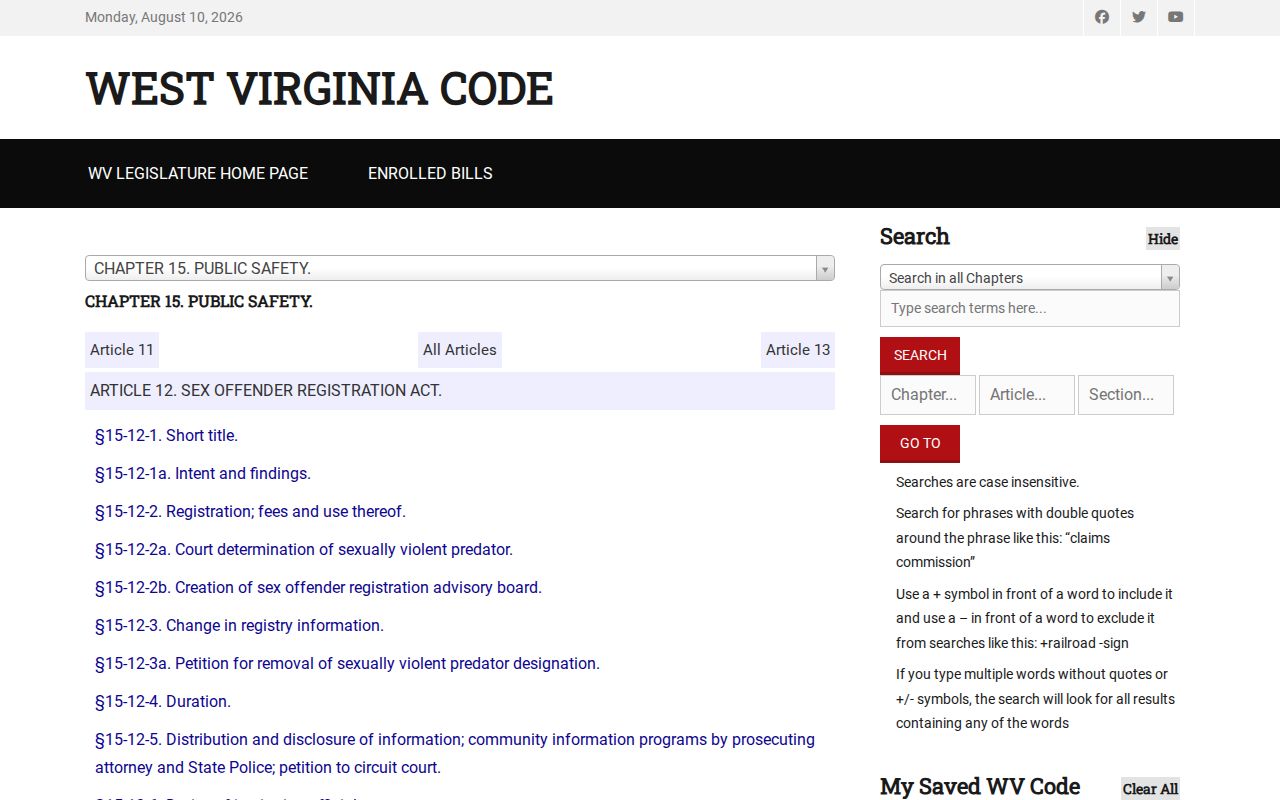
The statute supplies registration and disclosure rules, while the live WVSP profile supplies the public snapshot a Nicholas County reader can inspect.
Note: The disclaimer is part of the official search and should be read again when its terms or interface change.
West Virginia Sex Offender Registry Searches
A careful Nicholas County sex offender lookup follows a short sequence. The live interface was behind a disclaimer during research, so exact controls should be read as they appear at the time of use. Do not assume a radius, alert, or map option exists unless the current screen displays it.
- Open the WVSP registry gateway and read the accuracy, safety, and lawful-use terms before accepting them.
- Use the available name or geographic search route. Add Nicholas County, a city, or other place detail only when the live form offers that field.
- Compare aliases, photographs, physical traits, offense facts, and status before deciding that a result is the intended person.
- Open the profile, note the registration period and current public details, then report a suspected error to WVSP instead of confronting anyone.
The research captured the kinds of routes and checks available, but not a stable field-by-field form behind the gate. This table avoids promising controls that may not be present.
| Search element | Use | Required | Reading note |
|---|---|---|---|
| Name route | Find a registrant by the name fields shown | Depends on live form | Compare aliases and photographs |
| Geographic route | Check the place fields offered by WVSP | Depends on live form | Address data may lag an unreported move |
| Profile details | Review offense, location, duration, and status | After selecting a result | Not an individual risk score |
| NSOPW repeat search | Check an address or question beyond West Virginia | No | Official federal cross-state layer |
Nicholas Offender Checks Across States
The U.S. Department of Justice operates the National Sex Offender Public Website, commonly called NSOPW. It is the right second layer when a Nicholas County search involves an address beyond West Virginia, a recent move, or a name that may appear in more than one state registry. NSOPW does not turn separate state systems into one complete criminal-history file. It provides an official way to repeat the public registry inquiry across participating jurisdictions.
The national search interface is preserved in the official source image below.
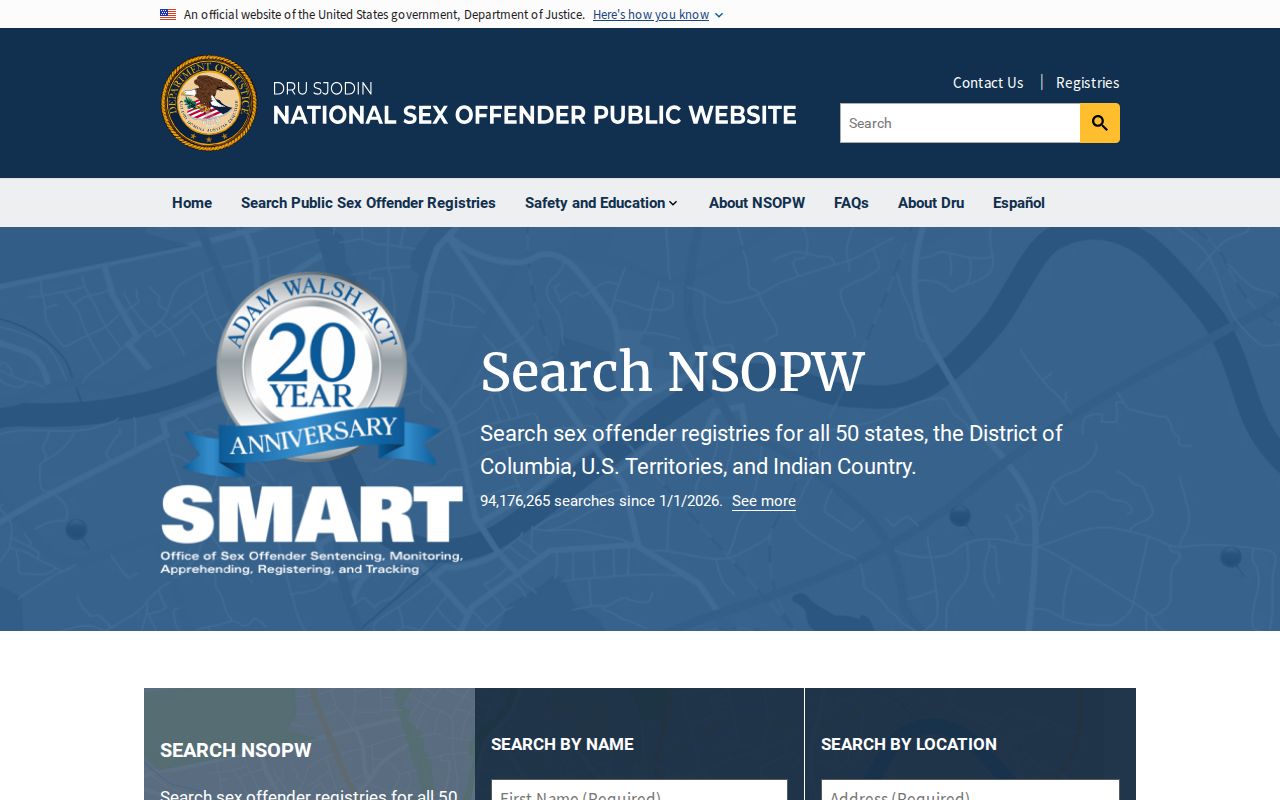
A reader should still return to WVSP for a West Virginia profile question because the state agency maintains the Nicholas County registry data and correction channel.
Registry Profiles: What They Show
A public profile is narrower than the registration file collected under state law. Public-facing categories may include the details below. Availability varies by profile, and a field should not be assumed merely because the statute authorizes collection. Sensitive items such as Social Security numbers, fingerprint or palm-print images, private phone data, and copies of identity documents are not public profile fields.
| Name and aliases | Identity names released for matching a public result. |
|---|---|
| Photo and description | A photograph and disclosed physical traits that help distinguish similar names. |
| Residential information | The public location details authorized for disclosure, subject to reporting and update lag. |
| Offense information | A brief description of the qualifying offense and conviction information shown by the profile. |
| Vehicle information | Disclosed vehicle data when it is present on the public record. |
| Status and duration | Registration status and whether the statutory duty lasts ten years or for life. |
One profile does not display every record about the case. For the filed charge, plea, disposition, or sentence, use the court clerk and the appropriate Nicholas County case system.
Note: A public profile omits protected registration data and should not be described as the registrant’s complete state file.
Nicholas Profiles and Private Data
Section 15-12-2 allows the registration process to collect a broad set of facts. These can include names, aliases, homes, regularly visited habitable property, work or school information, photographs, a brief offense description, vehicles, trailers, motor homes, internet identifiers, professional licenses, and drones. It can also include data that stays private, such as biometric records, government identification copies, and sensitive contact information. The public disclosure rule is not the same as the full intake inventory.
Other criminal laws can appear near registry research without defining a registry profile. For example, the official repeat-offender statute shown below governs sentence enhancement questions rather than public registry risk levels.
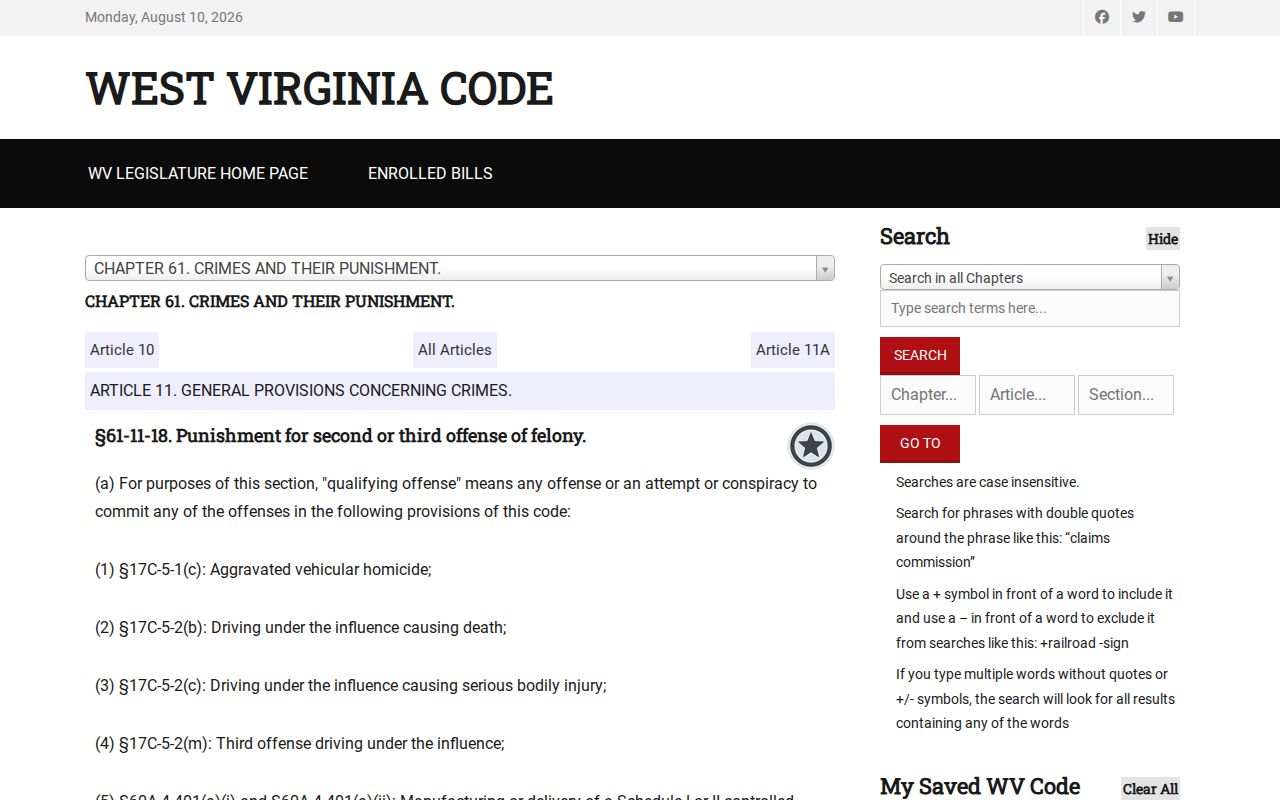
This distinction helps prevent a Nicholas County reader from turning a duration label into an unsupported claim about sentence history or future risk.
Registration Levels and Duties in West Virginia
West Virginia does not publish a simple Tier I, Tier II, or Tier III risk score. Its public framework uses statutory registration duration. An ordinary qualifying duty lasts ten years from release from prison, jail, or a mental facility, or from placement on probation, parole, supervised release, or conditional release. Early discharge does not cut that period short. Lifetime registration applies to categories named by law, including certain prior qualifying convictions, multiple violations or victims, sexually violent offenses, predator determinations, and qualifying offenses involving an actual, believed, or perceived minor.
| West Virginia category | Duration | Public meaning |
|---|---|---|
| Ordinary qualifying registration | Ten years from the controlling release or supervision event | A legal reporting period, not a low-risk rating |
| Lifetime qualifying registration | Life | A statutory category, not a prediction of future conduct |
Changes and verification are governed by W.Va. Code sections 15-12-3 and 15-12-10. The researched sources did not support a single public verification-frequency table for all registrants, so no frequency is invented here.
Note: Ten-year and lifetime labels state a reporting period; neither label is a low, medium, or high risk score.
Correcting Nicholas Registry Information
A stale address can reflect a reporting failure, processing delay, or other update problem. It should not prompt direct contact. Send a suspected public-data error to the WVSP Registry at registry@wvsp.gov or call 304-746-2133. Give enough public profile context to identify the record and explain the apparent mismatch. Call 911 only for immediate danger.
The registry duty is distinct from custody. Central Regional Jail serves Nicholas County, but its offender search answers whether someone is in jail or prison. The official Central Regional Jail page is shown in the image below.
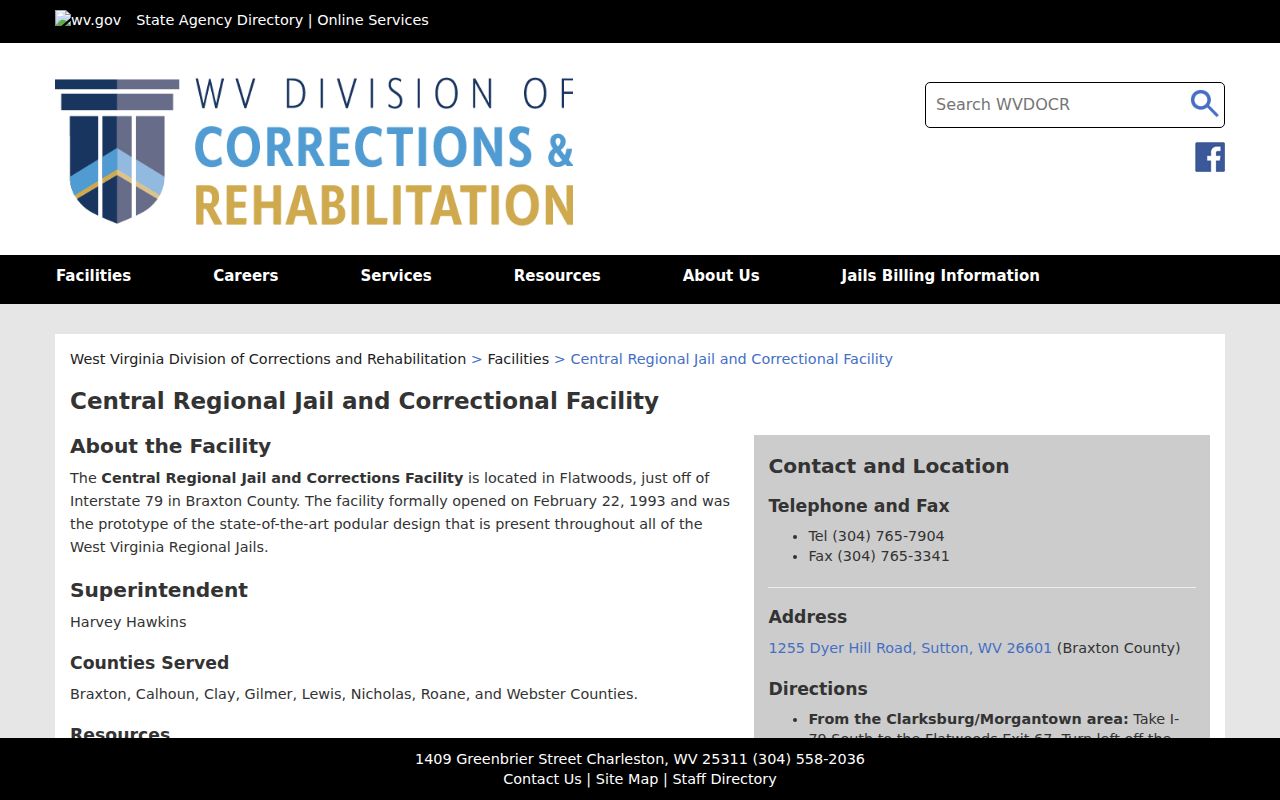
A jail result cannot confirm current registry compliance, and a registry result cannot establish present custody.
Nicholas Registry and Court Records
A Nicholas County registry profile and a Nicholas County criminal case file answer different questions. The registry presents the current public disclosure tied to an active statutory registration duty. The court file presents the accusation as filed, later amendments, a plea or trial result, orders, disposition, and sentence. A registry offense label may be brief, so the Nicholas County court record is the better source when exact legal wording or the path of the prosecution matters.
The sources also have different gaps. A person with an old Nicholas County sex-offense case may not be subject to current registration, so absence from the registry does not erase the court history. A court docket, in turn, does not replace the registry’s current address and compliance function. Search each official system for its own purpose, compare identifying details with care, and direct a registry error to WVSP while directing a case-file error to the clerk or originating court.
Using Registry Information Lawfully
The Nicholas County registry lookup exists for reasonable safety precautions and community awareness. Read profiles with care, keep children and family safety plans grounded in verified facts, and use official reporting channels when something seems wrong. Do not infer that a missing result proves no past case exists. Likewise, do not infer that a listed person is at an address at the moment of the search or that WVSP has assigned an individual risk prediction.
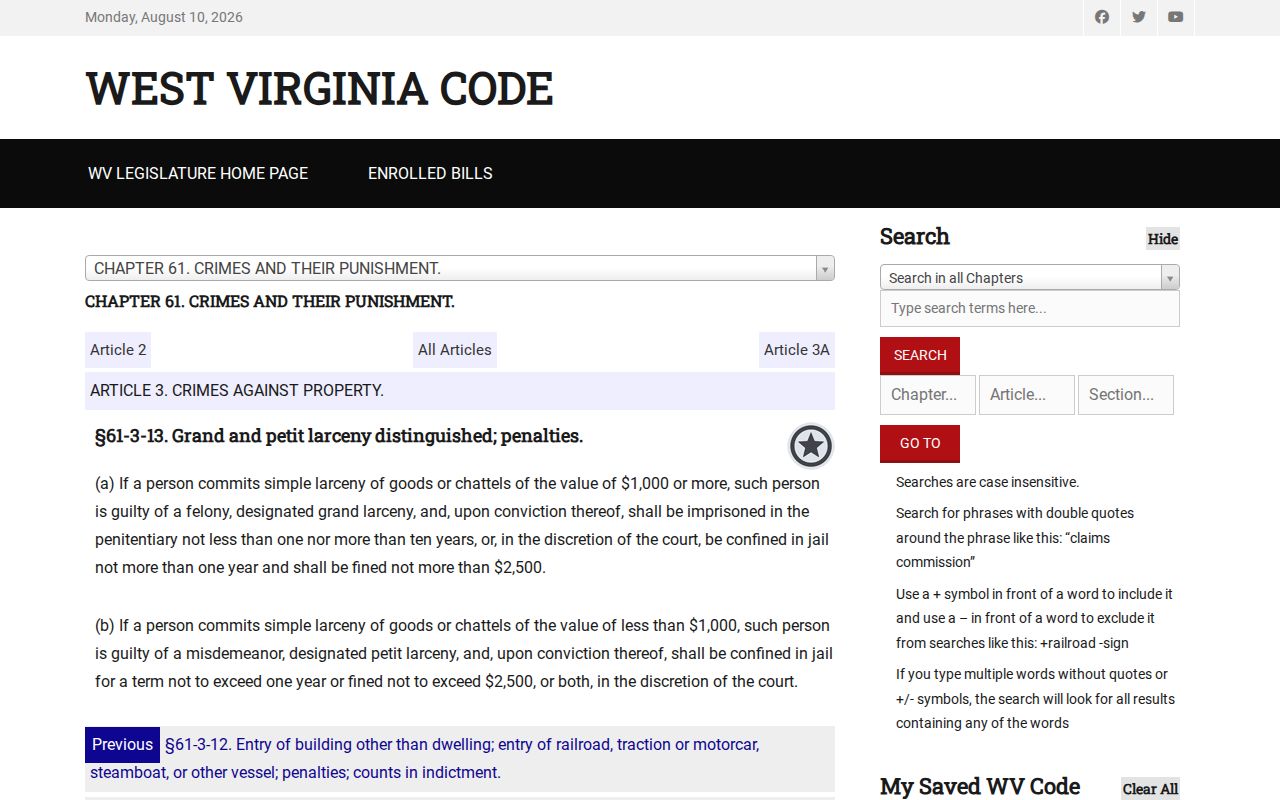
West Virginia’s criminal code contains many offense-specific rules. The official larceny statute source shown below is one example of why a statute and case file must be read in their own context rather than folded into a registry profile.
The registry is a focused disclosure system, not a substitute for every Nicholas County criminal court record.
Misuse warning: Threatening, intimidating, or harassing a registrant or household is prohibited and investigated under West Virginia Code Chapter 15, Article 12. Use the data only for lawful safety steps.
Note: Report data concerns to WVSP and call 911 only when there is an immediate threat to safety.